
CTI for Global Risk Management
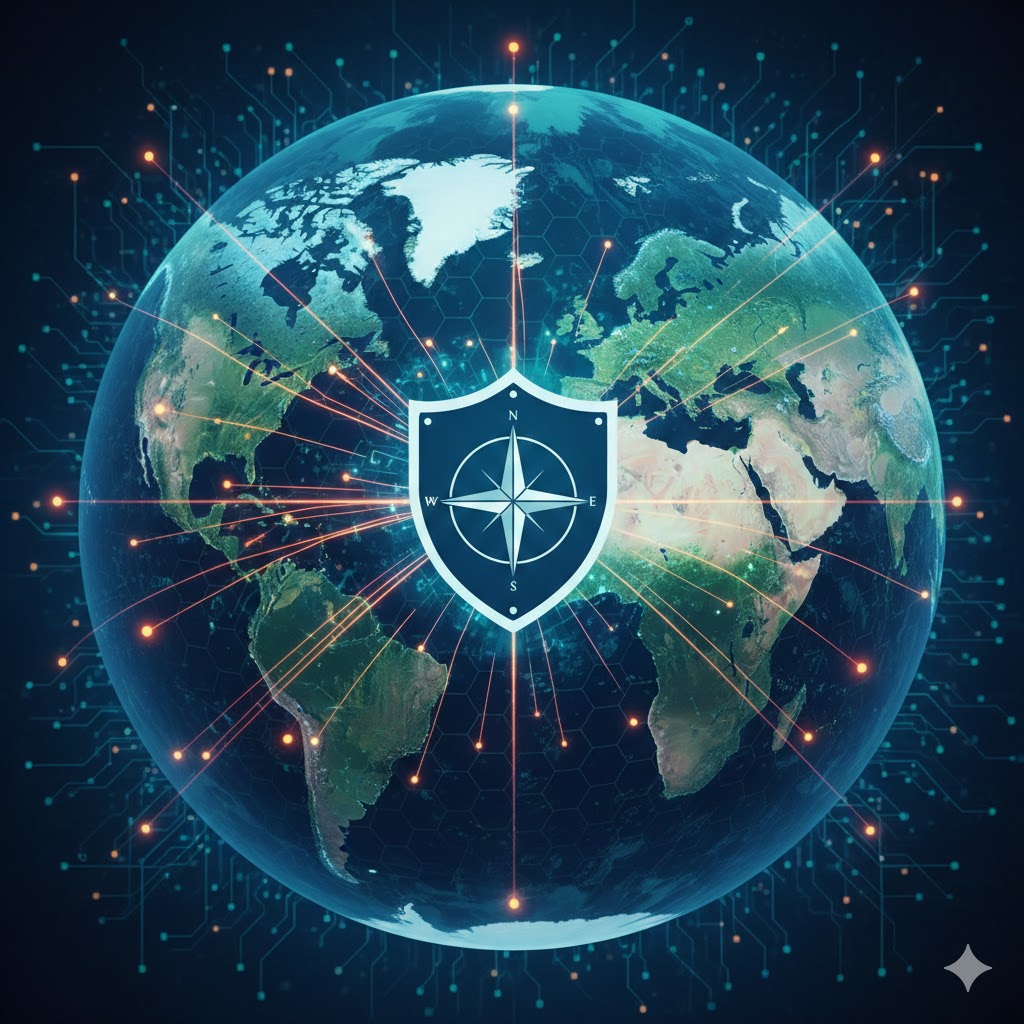
In today's hyper-connected global economy, organizations face escalating cyber threats that transcend borders, industries, and traditional defenses. Cyber Threat Intelligence (CTI) emerges as the cornerstone for global risk management, providing actionable insights into adversary tactics, emerging vulnerabilities, and geopolitical influences that shape attack landscapes. As cybercrime losses are projected to reach $20 trillion annually by 2026, businesses cannot afford reactive postures CTI for global risk management enables proactive defense, turning raw threat data into strategic advantage, at Informatix.Systems, we provide cutting-edge AI, Cloud, and DevOps solutions for enterprise digital transformation. Our CTI platforms fuse real-time intelligence with automated workflows, empowering enterprises to anticipate risks across multi-cloud environments and distributed operations. This integration not only enhances visibility but also accelerates response times, reducing dwell periods from weeks to hours. The business imperative is clear: CTI shifts risk management from siloed cybersecurity to enterprise-wide resilience. Global supply chains amplify vulnerabilities a single third-party breach can cascade into multimillion-dollar disruptions. Strategic CTI illuminates these interconnections, informing board-level decisions on investments and compliance. Operational CTI equips SOC teams with tactics, techniques, and procedures (TTPs) for threat hunting, while tactical CTI delivers indicators of compromise (IOCs) for immediate blocking. For multinational enterprises, CTI for global risk management addresses regulatory divergences like GDPR, CCPA, and emerging AI frameworks, ensuring compliance amid evolving threats. Predictive analytics powered by AI forecast attack vectors, prioritizing high-impact risks. Case studies from healthcare and energy sectors demonstrate 70% faster detection and significant cost savings through CTI-driven mitigation. As 2026 approaches, with vendor consolidation and AI augmentation as key trends, organizations adopting CTI will outpace adversaries, safeguarding revenue, reputation, and innovation.
What is Cyber Threat Intelligence?
Cyber Threat Intelligence (CTI) involves collecting, analyzing, and distributing data on cyber threats, adversaries, and vulnerabilities to strengthen security postures. It transforms disparate threat feeds into contextual insights for decision-making.
Core Components of CTI
- Threat Data Collection: Aggregates IOCs, TTPs from diverse sources like dark web, SIEM logs.
- Analysis Frameworks: Applies MITRE ATT&CK for standardization.
- Distribution Mechanisms: Dashboards, APIs for SOC integration.
CTI Lifecycle
CTI follows a structured process: planning, collection, processing, analysis, dissemination, and feedback. This cycle ensures continuous relevance in dynamic threat landscapes. At Informatix.Systems, we provide cutting-edge AI, Cloud, and DevOps solutions for enterprise digital transformation, streamlining this lifecycle with automated pipelines.
Types of CTI for Risk Management
CTI categorizes into strategic, operational, tactical, and technical types, each tailored to organizational needs in global risk management.
Strategic CTI addresses global risk management by linking threats to macroeconomic factors. Operational CTI builds resilient detection strategies.
Benefits of CTI in Global Enterprises
CTI for global risk management delivers measurable ROI through enhanced detection, reduced risks, and cost efficiencies.
- Proactive Threat Detection: Identifies attacks early, cutting dwell time by 70%.
- Informed Decision-Making: Prioritizes investments based on real threats.
- Incident Response Acceleration: Contextualizes breaches for faster remediation.
- Cost Savings: Prevents breaches, optimizing security spend.
Statistics show organizations using CTI report 36% better data fusion for contextual risk posture.
Strategic CTI for Executive Risk Oversight
Strategic CTI provides high-level analysis of global threat trends for C-suite alignment.
Geopolitical Influences
Threat actors exploit elections, conflicts—CTI forecasts sector impacts.
Long-Term Forecasting
Predicts ransomware surges, guiding budget allocations through 2026. Executives leverage strategic CTI for risk quantification models. At Informatix.Systems, we provide cutting-edge AI, Cloud, and DevOps solutions for enterprise digital transformation.
Operational CTI in Daily Risk Operations
Operational CTI focuses on adversary behaviors, enabling threat hunting and playbook development.
- TTP Mapping: Aligns defenses to MITRE frameworks.
- Campaign Tracking: Monitors active operations globally.
- Workflow Integration: Automates SOC triage.
This layer reduces alert fatigue, enhancing efficiency in global risk management.
Threat Hunting Applications
Hunters use operational CTI to uncover latent threats evading tools.
Tactical CTI for Immediate Threat Blocking
Tactical CTI delivers machine-readable IOCs for firewalls and EDR.
Key Tactics:
- IP/domain blocking.
- Hash-based malware detection.
- Real-time feed ingestion.
Integration with SIEM yields 25% workflow embedding gains.
Integrating CTI with AI, Cloud, and DevOps
AI enhances CTI by processing vast amounts of data for predictions.
AI-Driven Enhancements
- Pattern recognition in logs.
- Automated triage.
Cloud enables scalable CTI; DevOps automates pipelines. At Informatix.Systems, we provide cutting-edge AI, Cloud, and DevOps solutions for enterprise digital transformation.
Integration Benefits:
CTI Success in Global Risks
Real-world examples validate CTI for global risk management.
- Healthcare Ransomware Mitigation: CTI profiling stopped encryption, restoring systems swiftly.
- Retail Supply Chain Defense: Early vendor risk detection prevented breaches.
- Energy Infrastructure Protection: Anticipated disruptions via TTP analysis.
Financial sectors report enhanced detection via CTI.
Third-Party Risk Management with CTI
CTI bolsters TPRM by monitoring vendor threats continuously.
- Systemic Dependency Assessment: Cloud concentration risks.
- Fourth-Party Exposure: Subcontractor tracking.
Dynamic CTI reduces supply chain vulnerabilities.
2026 CTI Trends in Risk Management
Key shifts include AI automation, platform consolidation, and CTEM.
Predictions:
- 36% internal-external data fusion.
- Post-quantum integration.
- Unified GRC dashboards.
ERM trends emphasize financial quantification.
Implementing CTI Frameworks Globally
Steps for Deployment:
- Assess maturity.
- Select feeds/platforms.
- Train teams.
- Measure ROI via metrics.
Challenges: Data overload solved by AI prioritization. At Informatix.Systems, we provide cutting-edge AI, Cloud, and DevOps solutions for enterprise digital transformation.
Challenges and Solutions in CTI Adoption
Common hurdles include integration complexity and skill gaps.
Solutions:
- Automation: AI triage.
- Training: Role-based programs.
- Metrics: Dwell time reduction tracking.
Proactive CTI overcomes these for resilient global risk management. CTI for global risk management equips enterprises with foresight, efficiency, and resilience against 2026 threats. From strategic oversight to tactical blocking, integrated CTI enhanced by AI, Cloud, and DevOps delivers ROI through prevented breaches and optimized operations.Embrace CTI today for tomorrow's security. Contact Informatix.Systems at https://informatix.systems to deploy cutting-edge solutions tailored for your enterprise digital transformation. Schedule a demo now and fortify your global risk posture.
FAQs
What is the primary role of CTI in global risk management?
CTI provides actionable insights into threats, enabling proactive mitigation across borders.
How does AI enhance CTI effectiveness?
AI automates analysis, predicts attacks, and reduces response times.
Which industries benefit most from CTI?
Healthcare, finance, energy, and retail see the highest impacts.
Can CTI integrate with existing DevOps pipelines?
Yes, via automated security workflows and CI/CD scanning.
What are the 2026 CTI trends for enterprises?
Vendor consolidation, AI augmentation, and data fusion dominate.
How to measure CTI ROI?
Track dwell time, prevent incidents, and achieve cost savings.
Is OpenCTI suitable for global teams?
Its RBAC and sharing features support distributed operations.
How does CTI address third-party risks?
Continuous monitoring and vendor scoring mitigate supply chain threats.
No posts found
Write a review