
Cyber Threat Intelligence for Intelligent Risk Management
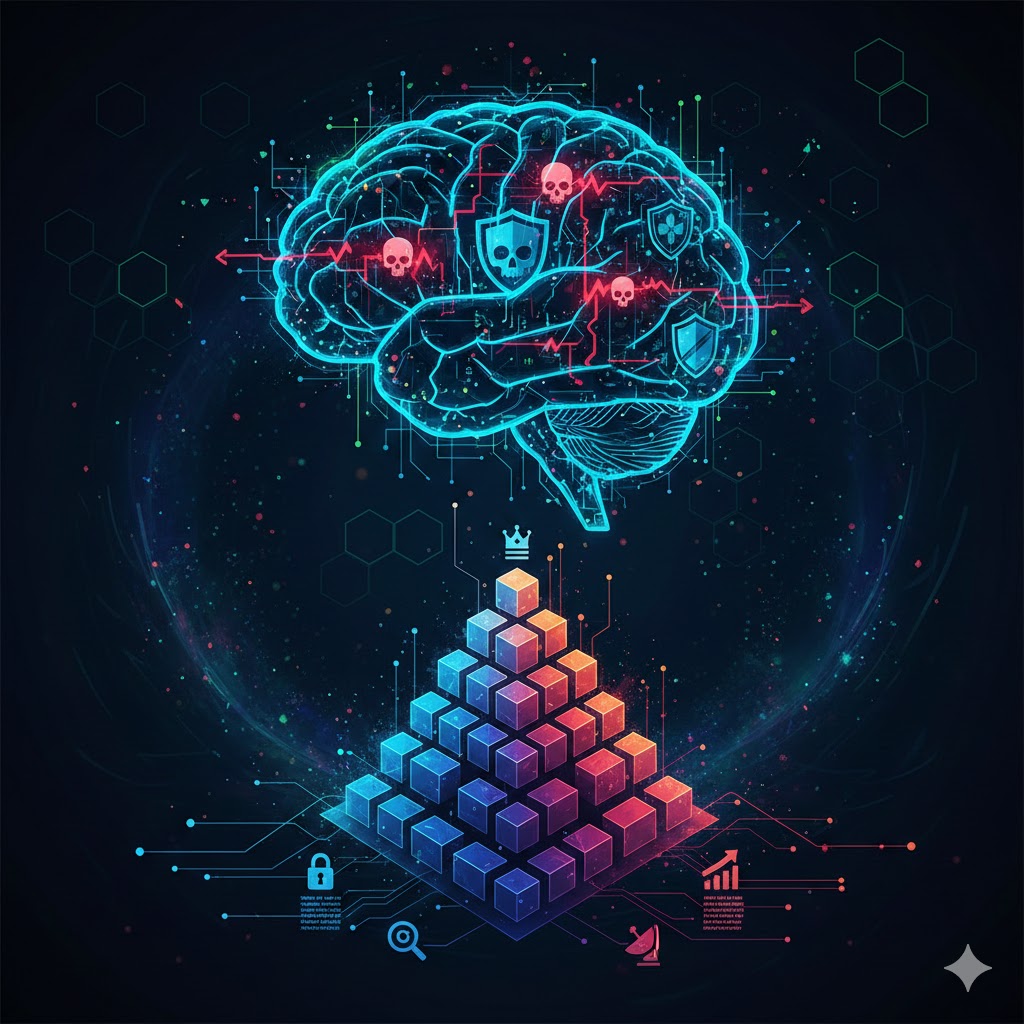
In today's hyper-connected digital landscape, enterprises face escalating cyber threats that evolve faster than traditional defenses can counter. Cyber Threat Intelligence (CTI) emerges as the cornerstone for intelligent risk management, converting raw data on adversaries, vulnerabilities, and attack patterns into actionable insights. This proactive approach shifts organizations from reactive firefighting to strategic foresight, enabling them to anticipate breaches, prioritize resources, and minimize financial losses that average $1.6 million per incident for small to medium businesses. The business imperative is clear: with ransomware groups like SafePay disrupting global operations as seen in the 2025 Ingram Micro attack—companies ignoring CTI risk operational paralysis and reputational damage. CTI categorizes threats into strategic (high-level trends), operational (adversary campaigns), tactical (attack techniques), and technical (indicators of compromise or IOCs), empowering CISOs to align security with boardroom priorities at Informatix.Systems, we provide cutting-edge AI, Cloud, and DevOps solutions for enterprise digital transformation, helping clients integrate CTI seamlessly into their ecosystems. As threats proliferate driven by AI-powered attacks and geopolitical tensions effective CTI for risk management demands structured frameworks, mature processes, and emerging technologies. This article explores CTI's full spectrum, from lifecycle to future trends, equipping enterprise leaders with strategies for 2026 resilience. By mastering cyber threat intelligence, businesses not only survive but thrive amid uncertainty.
What is Cyber Threat Intelligence?
Cyber Threat Intelligence (CTI) represents evidence-based knowledge derived from analyzing threats, adversaries, and methodologies to bolster organizational defenses. It transforms disparate data sources logs, dark web chatter, malware samples into insights that predict, detect, and mitigate risks. Unlike basic threat data, CTI contextualizes information for specific industries, assets, and threat actors.
Core Components of CTI
CTI encompasses multiple layers:
- Indicators of Compromise (IOCs): File hashes, IPs, and domains signaling active attacks.
- Tactics, Techniques, Procedures (TTPs): Adversary behaviors like phishing or lateral movement.
- Threat Actors: Nation-states, ransomware gangs, or insiders with motives and capabilities.
Why CTI Matters for Enterprises
CTI fuels cybersecurity by uncovering vulnerabilities and enabling proactive allocation. Organizations using CTI reduce mean time to detection by 60-75%, turning potential catastrophes into contained events.
Types of Cyber Threat Intelligence
CTI divides into four primary types, each serving distinct risk management needs. Strategic CTI offers executive overviews of global trends; operational details of campaigns; tactical aids detection; technical feeds and tools with IOCs.
This classification ensures comprehensive coverage, from boardroom strategy to endpoint response.
The CTI Lifecycle Explained
The CTI lifecycle forms a continuous loop: planning, collection, processing, analysis, dissemination, and feedback. It ensures intelligence remains relevant amid evolving threats.
Planning and Direction
Define requirements based on assets, threats, and priorities. Security leaders identify gaps, such as sector-specific ransomware risks.
Collection
Gather data from open sources, dark web, honeypots, and partners. Tools automate ingestion for scale.
Processing and Analysis
Filter noise, correlate IOCs, and apply AI for pattern detection. Produce actionable reports with confidence scores.
Dissemination and Feedback
Share via dashboards or alerts; refine via stakeholder input. This closes the loop for continuous improvement. At Informatix.Systems, we provide cutting-edge AI, Cloud, and DevOps solutions for enterprise digital transformation, optimizing this lifecycle for efficiency.
Integrating CTI with Risk Management
CTI for intelligent risk management aligns threats with business impact. Steps include risk assessment, intelligence gathering, prioritization, and integration into frameworks like NIST.
- Map Threats to Assets: Prioritize high-value targets like customer data.
- Quantify Risks: Use CTI to score likelihood and impact.
- Proactive Controls: Implement based on TTPs, reducing attack success.
Benefits include reduced breach likelihood, better resource allocation, and faster response. CTI bridges silos between security and risk teams.
CTI Maturity Models
The Cyber Threat Intelligence Capability Maturity Model (CTI-CMM) assesses programs across 10 domains at four levels: Pre-foundational to Optimizing. It evaluates tactical, operational, and strategic delivery.
Key Domains and Levels
Organizations' average maturity yields targeted roadmaps. Aim for CTI2+ for risk reduction.
Role of AI in Cyber Threat Intelligence
AI in cyber threat intelligence automates analysis, predicts attacks, and cuts false positives by 95%. Machine learning detects anomalies in vast datasets, enabling predictive defense.
AI Applications
- Real-time IOC Processing: Correlates threats across systems.
- Behavioral Anomaly Detection: Spots zero-days via heuristics.
- Predictive Modeling: Forecasts vectors from historical data.
Challenges and Solutions
AI hallucinates; hybrid human-AI oversight mitigates this. Platforms like Cyble Vision exemplify integration. By 2026, agentic AI will dominate proactive CTI.
Top CTI Tools and Platforms for 2026
Leading cyber threat intelligence tools include CrowdStrike Falcon, CyCognito, and Cisco Umbrella, offering IOC feeds, dark web monitoring, and SIEM integration.
Select based on integrations and industry needs. Bitdefender adds honeypot data.
Best Practices for CTI Programs
Optimize cyber threat intelligence with these practices:
- Stakeholder Collaboration: Cross-functional teams refine requirements.
- Continuous Monitoring: Automate feeds, tune heuristics.
- Feedback Loops: Post-incident reviews update models.
- Balanced Detection: Combine signatures and behavior.
Centralized platforms reduce silos; regular scans catch remote tools.
Real-World Case Studies
- Ingram Micro Ransomware (2025): Lacked CTI scope analysis, prolonging downtime. Integrated platforms cut dwell time.
- Healthcare WannaCry: NIST-CTI hybrid enabled proactive patching.
- Global Firms via Cyble: Real-time AI detected APTs, averting breaches.
These underscore CTI's ROI in crisis aversion.
Future Trends in CTI for 2026
Cyber threat intelligence trends 2026 feature AI autonomy, unified SOCs, and exposure management. Generative AI accelerates attacks but enables predictive defenses; quantum-safe crypto emerges.
- Agentic AI: Autonomous threat hunting.
- Collective Defense: Shared intel platforms.
- TTP Focus: Behavioral over IOCs.
- AI Firewalls: Block prompt injections.
Expect 60%+ MTTD reduction via continuous investigation. At Informatix.Systems, we provide cutting-edge AI, Cloud, and DevOps solutions for enterprise digital transformation, preparing clients for these shifts.
Challenges in CTI and Solutions
Common hurdles: data overload, integration silos, skill gaps.
- Noise Reduction: AI prioritization.
- Silo Busting: Unified platforms.
- Talent: Automation augments analysts.
Proactive alignment with risk frameworks overcomes these. Cyber Threat Intelligence for intelligent risk management equips enterprises to navigate 2026's AI-driven threats through lifecycles, maturity models, and tools like CrowdStrike. Integrating CTI yields proactive resilience, slashing risks and costs. Ready to fortify your defenses? Contact Informatix.Systems today for tailored AI-powered CTI solutions that drive your digital transformation forward. Schedule a consultation at https://informatix.systems now.
FAQs
What is Cyber Threat Intelligence?
CTI analyzes threats to produce actionable insights for defense.
How does CTI improve risk management?
It prioritizes threats, allocates resources, and enables prediction.
What are the main types of CTI?
Strategic, operational, tactical, technical.
Name the top CTI tools for 2026.
CrowdStrike Falcon, CyCognito, Cisco Umbrella.
What role does AI play in CTI?
Automation, anomaly detection, and prediction.
How to measure CTI maturity?
Use CTI-CMM across 10 domains.
What are the 2026 CTI trends?
Agentic AI, unified SOCs, exposure focus.
Common CTI challenges?
No posts found
Write a review